Sunday, February 07, 2010

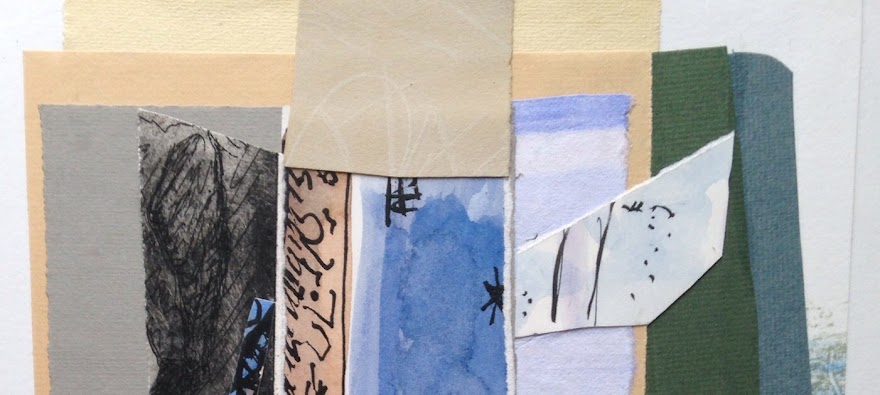
Ceramics Western NY Landscapes #13, 14, & 15


5" x 3"

3 1/2" x 4"

3" x 3 1/2"
ceramic reliefs

What would I do without NPR? A recent story about memory and time aired, enlightening me to the science behind the feeling of time speeding up as one gets older. My recent move, my son's transition to adolescence (evidenced by his wishing to say "crap" and "pissed off" as well as keeping me out of sight when the bus picks him up) and the appearance of new wrinkles make perfectly clear that time is marching on. We begin saying things we heard adults say when we were children such as "Where does the time go?" and "They grow up so fast." A friend from high school Facebooked that she knows she is old because she and her husband were falling asleep watching t.v. with their fifteen-year-old and her boyfriend. It was 8:00 p.m.

Back to NPR. The story is Why Does Time Fly as You Get Older by Robert Krulwich. Warren Meck, a psychology professor from Duke University, and a neuroscientist, David Eagleman, from Baylor College of Medicine provide the research. Essentially, when you are experiencing something new your brain takes in more details, more information. Repeat experiences don't do this and seem shorter. One might remember taking your new puppy on her first walk but a regular schedule walks in the same neighborhood with your grown dog may blend together. The flip side is that as one enters the "golden years" the moments become more precious and can again have the detail of youthful new experiences. The article has a great Simpsons clip called Homer Every Day which is so worth a look. [If you are trying to improve your memory (a decline starts at age thirty), one effective way is physical exercise.]

How does this relate to my work? The first two reliefs are continuations of work with side panels relating to the view from a kitchen window as well as the stage. The bottom piece is playful with its description of snow in the form of snowballs. I like their shiny quality that contributes to the sense of reflected light. The majority, if not all, of my ceramic landscapes are like memories. They aren't done from life but either from a specific place and environmental situation or from layered experiences (even Shrek says he is a complex individual, layered like an onion). I'm looking to do some paintings of the nearby bay from life as soon as it gets above forty-five degrees and isn't windy enough to blow my easel over - some new experiences to add to my layers.

Sunday, January 31, 2010

Frost


6 1/2" x 7 1/2" watercolor


A fall frost is often accompanied by gardeners rushing around trying to protect their plants in various manners. Word spreads quickly, "There's going to be a frost tonight!" Some plants make it, some don't. It makes me think of The Resiliency Movement to which I just became aware through a fascinating WGBH program called This Emotional Life. Apparently most people are equipped with resiliency, which doesn't mean that one isn't shaken by difficult life events but that one is able to bounce back and be renewed. It is incredible to hear stories of people who rebuild their lives after natural disasters like Haiti and acts of war. President Obama in his first State of the Union address Wednesday night commented on the resiliency of Americans currently experiencing economic hardship.found an on-line course* about resiliency developed by Dr. Kristi Miller and Dorothy J. Landon .


"To further this understanding (or perhaps this confusion), Werner and Smith (1982) believe that resilience refers to a dynamic process residing in individuals as well as in the environment. From this perspective, resilience reflects human development as opposed to being a genetic trait that only a few "superkids" possess. In addition, Rutter (1984) states that "resilience cannot be seen as a fixed attribute of the individual…If circumstances change, resilience alters" (p. 57). Furthermore, Masten, Best, and Garmezy (1990) classify three types of resilience:

  1. positive outcomes despite experiencing high-risk environments;
  2. competent functioning in the face of acute or chronic major life stressors; and
  3. recovery from a traumatic event."
We all run into major life stressors at some point in time, like plants. A list of stressors developed by psychiatrists Thomas Holmes and Richard Rahe in order of severity can be found on Wikipedia. Interesting that divorce, ranked number two is ahead of imprisonment, number four.

Art is meditative to me, a stress release. Frost is stable in its circular points of focus yet retains a sense of movement, growth, and atmosphere, reminders that change is a natural process.

*quoted with permission

Sunday, January 24, 2010

Sunrise January 2010


In between unpacking boxes and scheduling utilities I managed to make these two. The sketch I did at 6:45 a.m. looking out the kitchen window. Beyond those trees is the bay. the colors changed in seconds and fifteen minutes later it all turned blue. I want to hold onto the color. The trees have payne's gray, black, and blue mixed in. It was tricky to capture the volume of the clouds overhead when the dots want to flatten space, accentuating the picture plane. The two pictures are very different. The sketch is airy and energetic while the painting is staid and iconic, almost classical. Dictionary.com defines "staid" as "fixed, settled, or permanent". The drawing is more spontaneous, a reflection of how it was made. There is movement in the painting and the entire concept of a sunrise is temporal. The painting has that in addition to a feeling of being grounded, the dots are like map pinpoints, helping me to orient myself. So far so good.

Sunday, January 17, 2010

Looking Up


12" x 12" oil on panel

Oil paint! There's nothing like it. I couldn't have more pleasure eating an ice cream sundae. Amidst all the boxes from our January third move to Rhode Island I stole a small amount of time to break in my new studio. It is very modest, a third bedroom, compared to my former dream studio, but the press and flat files fit in the basement and we'll be setting up a small shed for the kiln.

Pressed for time, I made a picture as if I could only paint one dot and had to get everything I wanted to say into it, distilled like a haiku. The picture relates to other "minimalist" works I've done as well as a painting I did in 2005 called The Veil. The image came to me while watching Shaun the Sheep Off the Baa with my son. No kidding, the claymation cartoon by Aardman Animations. It is set on a farm so the setting is pastoral. There was a shot of Shaun looking up from a pit or something; I don't quite recall the scenario. My husband thought of artist Andy Goldsworthy (he makes art out of nature while in nature, stunning, check him out) when he saw it. Funny, I looked at the cover of my book of his work in passing as I unpacked it, finding it too large to fit on my bookshelf. It is perhaps an unconscious influence but there is definitely a relationship.

The view is from underground looking up at the sky. There's a little Alice in Wonderland to it, a surreal journey from one place to another that is unknown. It is definitely about my move. You can never quite know exactly what it will be like until you get there. The brown vortex suggests climbing through an earthy, murky tunnel with eyes set on getting out. The central focus is air, breathe-ability. My family has been looking forward to much shorter work hours for my husband, friends in the neighborhood for my son, and an art community for me. The goal is more breathe-ability and already we've experienced a significant difference. For the first time in our eighteen-year relationship my husband has been home for breakfast and dinner every day. My son has plans to see three friends outside of school this week, and I've had a close artist friend from college over and will be getting together with three others shortly.

Back to the painting, the lighter and warmer brown towards the cooler brown/black surrounding the center is a transitional space. It isn't static but propellant. It also isn't negative like solid, flat black but like fertile soil, implying growth through change. It isn't a smooth transition, however, and one could imagine it being a bit slippery, something one has to slug oneself through in order to make it, similar to climbing a rope but messier. The view is also telescopic, the blue circle like a planet, a new world for which there is little detail, little information except something placid, pleasant, promising. I think everyone needs to carve out a space in their days, their lives to have such a place.

Sunday, January 10, 2010

Western NY Landscape Ceramic Relief #10, #11, #12

Western NY Landscape 10 Ceramic Relief 3 1/2x4 1/2_2009


Western NY Landscape 11 Ceramic Relief 3x5_2009


Western NY Landscape 12 Ceramic Relief 3 1/2x7_2009


Here's a little summer for you in January. Our move from the Rochester area to Rhode Island had eventful weather. We hit white out blizzard conditions and needed to sleep just off the road from three to six a.m. Our new town had an uncharacteristic six inches of snow, while back in Rochester a friend reported snow up to mid-thigh. While I like the snow, dangerous driving conditions and salt and dirt tracked through my new house by five movers makes me less than appreciative at the current moment.

The bottom two reliefs remind me a bit of the landscape paintings of the 18th century Rococo artist, Jean-Honore Fragonard. Landscape with Three Washerwomen has the pastel coloring that makes me consider the comparison. His work is exuberant which I think is another quality these reliefs share. I see my reliefs as not only objects but as images. Despite their solidity and material resistant to deterioration, they carry a fleeting moment, and particular weather conditions. Not made to look fully illusionistic, "real", they are somehow hyper-real. I used to hate Fragonard and Rococo art for its frivolity, regarding it as "foo foo". It seems that some points in history disdain others but appreciation comes around eventually. I never heard anyone in art school going around saying how much they were influenced by Rococo art, in keeping with the style's initial dismissal by art critics as "frivolity". These are as close to it as I get and I admit some discomfort at getting so close, but I now see subtlety, light, space, and passion in this time period and would like to claim those qualities for myself.

Sunday, January 03, 2010

Pink Roses from Amy

Pink Roses From Amy #1, 8 1/2"x6" watercolor 2010


Pink Roses From Amy#2, watercolor 9" x 6 1/2" 2010


I just arrived at my new house in Rhode Island. I am leaving the countryside of Western New York as my son wants a more walkable neighborhood and friends on his street rather than our somewhat isolated country road. We will also be closer to friends and family and fellow artists for me. We are leaving behind good friends, however, whom I wish could come with us. Last year my friend, Carin, who gave me the first bouquet of pink roses (they inspired the series of oil paintings) is one of them. My friend, Amy, is another. Amy brought be a dozen pink roses at our coffee "goodbye", knowing how much I liked the first roses. You know, being given a dozen roses by a friend rather than a boyfriend is different. If they had been red roses, given the cultural significance, it would have been a little strange. These flowers were both complete surprises and conveyed the warmth of the friendships. I am very fortunate to have such friends and I think the spirit of the paintings reflect this. The oil paintings as well as these watercolors are celebratory and intensely alive. I think we feel more alive when someone steps out of their box to express their love. I'm not an overly sentimental person but occasionally I'll get a bit teary when witnessing such moments in others. It is funny but when I heard of the passing of health care vote through the Senate I had such a feeling. It was particular to the way Senator Robert C. Byrd of West Virginia, a Democrat who typically wouldn't have voted for the bill, said "This is for my friend, Ted Kennedy --Aye!" It is an amazing thing when relationships can be so strong and close to one's heart.

I hope you have a Happy New Year filled with such warmth. Back to the boxes...

Sunday, December 27, 2009

White Window


8" x 9"
watercolor

regarding art:

"...transmission of one soul's innermost essence to another. Art is meant to be an unconstrained expression of the inexpressible. It's our way of telling each other things we feel but are unable to put into words. It is ultimately the only real way of sharing who we really are with the rest of the world."

created by Scott Adams